
in Liverpool (Reino Unido)
of the European Pain Federation (EFIC)
from the Multidisciplinary Spanish Pain Society (SEMDOR)
on intravenous lidocaine from the Complutense University of Madrid

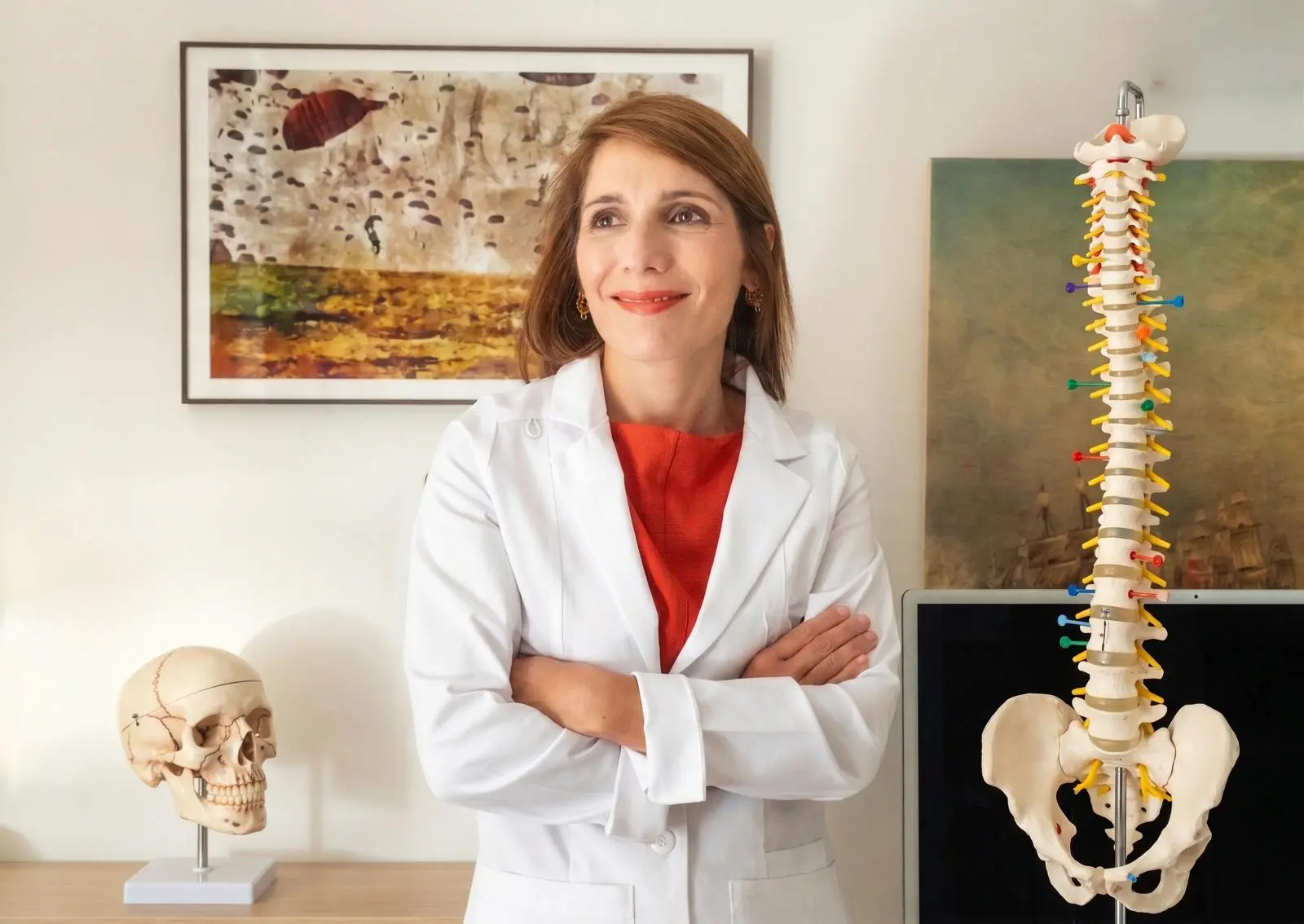
I am a Medical Doctor, Consultant Anaesthetist, and Expert in Chronic Pain
Firmly believing that only a rigorous and formal education permits one to provide care with sound clinical judgement and integrity, I relocated with my family to England to practise at The Walton Centre in Liverpool. This hospital, internationally renowned for its Comprehensive Pain Management Programme and its specialised clinics in Facial Pain, Pelvic Pain, Transitional Pain, Complex Regional Pain Syndrome, and Neuromodulation, serves a population of four million individuals.
Although I maintain my affiliation with the British centre through a clinical research contract, I have established my practice in Asturias to offer a modern and highly individualised clinical encounter for patients here, wherein I integrate clinical diagnosis, pharmacological management, minimally invasive interventional techniques, and a biopsychosocial approach.

Because chronic pain constitutes a disease in its own right and, akin to any other pathology, necessitates the intervention of highly specialised medical practitioners.
You require a professional who comprehends that existing with pain is not truly living; rather, it entails experiencing poorer sleep, losing mobility, and finding diminished enjoyment in life. It involves neglecting one’s personal grooming, cancelling a stroll, or being incapable of holding a knife and fork. It entails inventing excuses to avoid restaurants because the chairs lack backrests, withdrawing from the gymnasium, and altering interactions with other family members. It is failing to recognise oneself, and longing for the person one was before the onset of the pain.
Patients require physicians who look beyond their magnetic resonance imaging scans and understand that pain permeates every dimension of daily life.
The biological component of pain:
Often, surgery is not the best approach. Through interventional techniques, it is possible to act directly upon the nerves responsible for transmitting that unpleasant signal to the brain, thereby avoiding major surgery in many cases.
Numerous presentations of knee pain improve by treating the nerves of that specific joint.
The psychological component of pain:
Chronic pain and negative emotions are mutually reinforcing. Fear, sorrow, or anxiety act as potent amplifiers of pain perception. Conversely, persistent pain generates this emotional distress, thereby establishing a vicious cycle.
The fear of movement possesses a medical designation—kinesiophobia—and it serves as a predictive factor for an unfavourable prognosis.
The social component of pain:
Familial support, professional pressures and expectations, or the risk of isolation shape the manner in which the nervous system processes pain. Robust clinical support, founded upon empathy and communication, can objectively attenuate the intensity of the perceived pain.
Trust and honest communication with your physician increases increase the probabilities of treatment success.
Select your pain specialist judiciously. Your quality of life depends upon it.
Sin embargo, pocas personas saben que existen profesionales especializados en dolor. Yo soy una de ellas.
He dedicado años a estudiar el modelo biopsicosocial y a prestar atención a tres dimensiones fundamentales del dolor:
Las causas biológicas del dolor
La relación entre dolor y emociones
La interacción entre factores sociales y dolor